

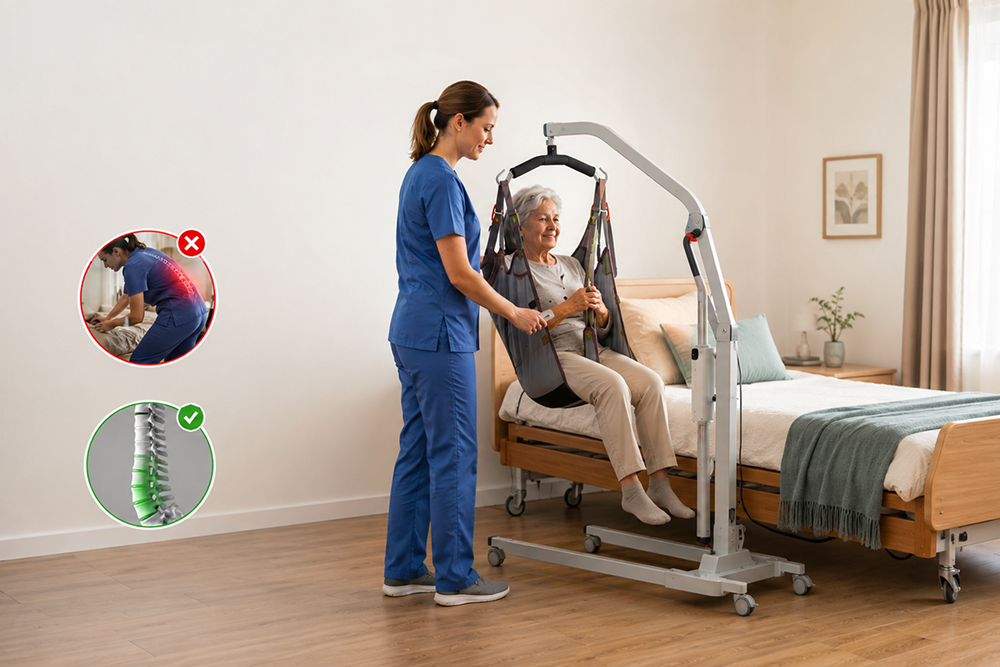
How Caregivers Can Prevent Back Injuries During Patient Transfers
One of the most physically demanding tasks that a caregiver performs daily is lifting another person. This task occurs once or more frequently during their single shift, such as moving someone from bed to a wheelchair, from a chair to a toilet, or from a car seat to a walker. The entire routine places a significant strain on the lower back, shoulders, and knees. Over weeks and months, that strain adds up, and many caregivers eventually face herniated discs, chronic pain, or injuries serious enough to end their careers.
Recent healthcare safety research indicates that musculoskeletal injuries, specifically lower back injuries, are among the most frequent workplace injuries caregivers encounter. Even for family caregivers, the risk remains the same, mainly due to the lack of proper equipment or any formal training.
Luckily, medical mobility solutions, such as electric patient lifts from reputable suppliers like Med Mart, have made transfers easier and safer. They reduce physical strain on caregivers, while enhancing comfort and dignity for patients.
Why Manual Transfers Put Caregivers at Risk
Patient transfers often require a sudden burst of strength along with twisting and bending. This is the exact kind of movement that puts significant stress on spinal discs. It is common for caregivers to lift more body weight than recommended guidelines allow, especially when a person cannot bear any of their own weight. Time pressure, physical fatigue, and confined spaces make safe technique difficult to maintain. This is why caregiver back injuries are one of the most common home-care injuries ever reported.
The entire routine makes manual patient handling one of the common occupational risks associated with the caregiver role.
Common Risks Include
- Frequent bending and twisting motions
- Lifting body weight without assistance
- Limited space for adequate patient positioning
- Rushed transfers during emergencies
- Years of repetitive strain buildup
The risk is also common for even seasoned caregivers. No amount of adequate form can completely safeguard the spine when an individual’s body weight is supported by human arms alone.
Why Proper Body Mechanics Alone Isn't Enough
You’ve likely been recommended:
- Bend your knees
- Keep your back straight
- Lift with your legs
- Keep the patient close
Although these techniques are effective, they come with limitations.
Lifting an individual weighing 150 to 250 pounds or more demands physical strength that may exceed what one can safely support or manage. This is why most healthcare organizations have shifted toward “minimal-lift” or “no-lift” policies prioritizing mechanical lifting devices over manual transfers.
The objective here isn’t to lift better. It’s to lift less. This is where electric patient lifts make transfers possible by taking on the physical burden.
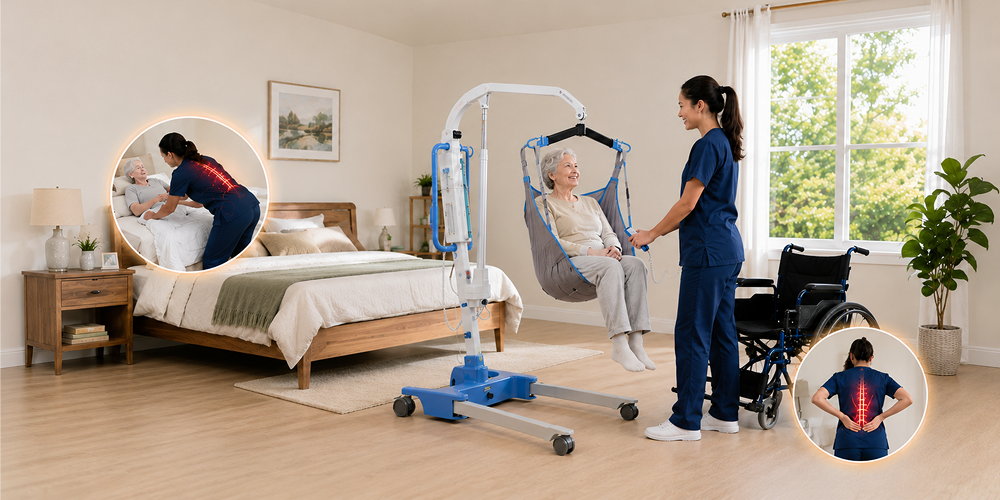
Signs It's Time to Use a Patient Lift
Caregivers often push themselves through the strain until an injury occurs. Identifying the early warning signs can safeguard both the caregiver's body and the individual's safety.
Consider adding a lift to the care routine if:
- Weight-bearing is no longer safe for the person
- Two caregivers are now required for every transfer
- Back, shoulder, or knee pain follows every lifting session
- Transfers happen several times a day
- A previous transfer has already resulted in a fall
Benefits of Using Electric Patient Lifts
Electric patient lifts open the door to safer, more efficient patient transfers while reducing physical stress on caregivers.
Eliminating the Lifting Motion That Causes Injury
One of the key benefits of electric patient lifts is that they remove the bending, lifting, and twisting motions that are the main contributors to caregiver back injuries. The motor handles the patient's overall weight, rather than placing additional strain on the caregiver’s spine.
Spine Protection During Transfers
- Eliminates manual lifting strain
- Keeps the spine in a neutral position
- Removes bending and twisting motions
- Supports long-term physical health
Lowering the Risk of Sudden Strain Injuries
A patient’s weight does not remain the same throughout the transfer. It can change when the individual moves or is repositioned, causing unplanned strain on the caregiver’s back. Electric lifts help to keep the movement controlled and predictable.
Preventing Sudden Back Strain
- Provides a lifting movement that is controlled and predictable
- Prevents sudden shifts in weight
- Reduces uncomfortable, unresponsive movements
- Helps prevent abrupt back injuries
Reducing Repetitive Strain From Daily Transfers
Caregivers typically need to perform multiple transfers over time. This puts a considerable strain on their back, which can eventually lead to chronic back pain. Electric lifts minimize this physical stress, thereby reducing the risk of injury.
Cutting Cumulative Back Strain
- Minimizing overall physical burden
- Eliminates the need for lifting repeatedly
- Reduces physical tension and strain
- Minimizes the risk of lower back pain
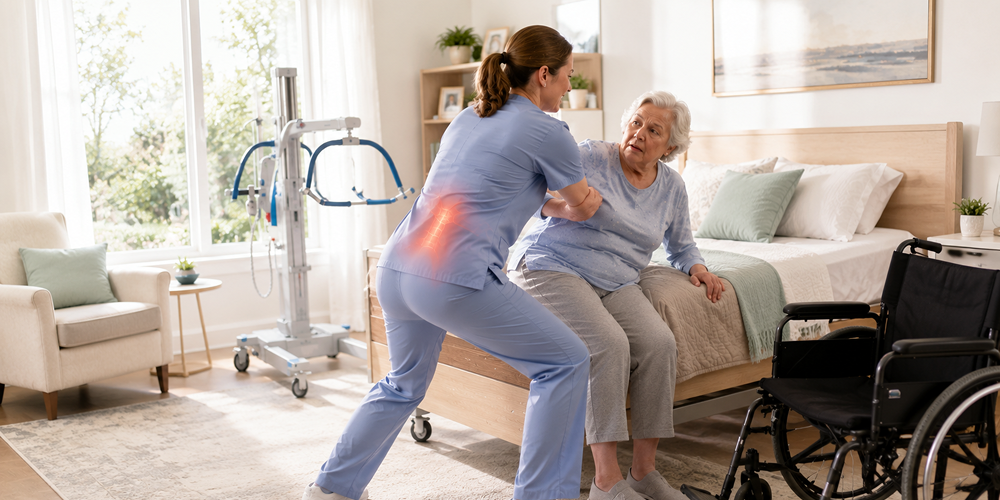
Supporting Caregivers Through Difficult Transfers
Transfers, such as those for bariatric or limited-mobility patients, are the most demanding for a caregiver. Electric lifts are built to safely manage these more challenging circumstances.
Handling High-Risk Transfers Safely
- Handles heavier patient weights
- Minimizes pressure when working in awkward postures
- Reduces the risk of harm in the transfer process
- Helps manage challenging transfers
Electric Patient Lifts Recommended by Med Mart
Choosing the right equipment is simpler when you can utilize dependable options that have been assessed by experts for comfort, safety, and durability. With that in mind, let's take a look at some electric patient lift options we would recommend for every caregiver.
Hoyer® Advance-E 340 Folding Patient Lift
The Hoyer Advance-E 340 Folding Patient Lift is a portable lift designed to provide reliable power during routine patient transfers. The device features a lightweight design and a folding frame, making it easy to transport and store.

Hoyer® Advance-E 340 Folding Patient Lift
Product Highlights
- Foldable for easy transport (no tools required)
- Oversized handle for smooth maneuvering
- Stands unaided during storage
- Foot pedal is used to open and close the base
- Durable, lightweight aluminum frame
- Push pad assists with initial movements
- Swan-neck legs enable closer access
Caregiver Benefit
It is both lightweight and foldable, and it has interactive controls that help caregivers move the patient with less physical effort.
Hoyer® Deluxe Power Patient Lift
The Hoyer Deluxe Power Lift ensures smooth, powered transfers that support a variety of care needs. The lift has ergonomic handles and two casters for controlled lifting.

Hoyer® Deluxe Power Patient Lift
Product Highlights
- Compatible with multiple sling styles
- Dual casters ease directional movement
- Leg guards protect the surrounding furniture
- Adjustable U-base for stability
- 400-pound weight capacity rating
- Ergonomic grips reduce hand strain
- Reverse actuator adds resident legroom
- Built-in emergency stop button
Caregiver Benefit
Regular transfers by caregivers are safer with seamless power lifting and protective leg guards.
Maxi Move® 5 Multifunctional Patient Floor Lift
With the Maxi Move 5 Multifunctional Floor Lift, caregivers can handle a myriad of common daily patient care challenges with ease. The various needs of each patient are met by interchangeable spreader bars included with this equipment.
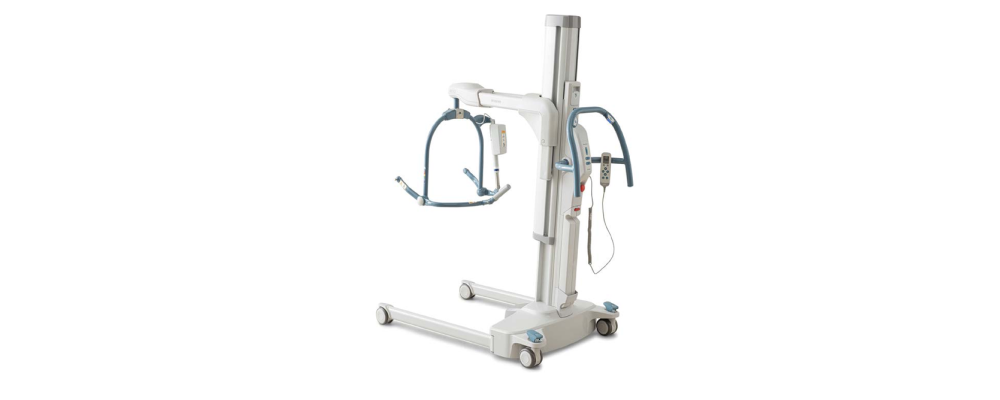
Maxi Move® 5 Multifunctional Patient Floor Lift
Product Highlights
- Built for diverse care challenges
- Combi™ attachment swaps spreader bars
- Wide range of resident interfaces
- Stable lifting to 600 pounds
- Reliable performance for daily routines
- Dual batteries enable up to 24-hour use
Caregiver Benefit
Bariatric-rated stability and interchangeable spreader bars help caregivers manage different transfer needs each time.
Med-Riser 450 Folding Patient Lift
The Med-Riser 450 Folding Patient Lift provides electrically controlled adjustments for easier transfers. It features a compact, foldable frame that handles heavy-duty lifting without compromising portability.
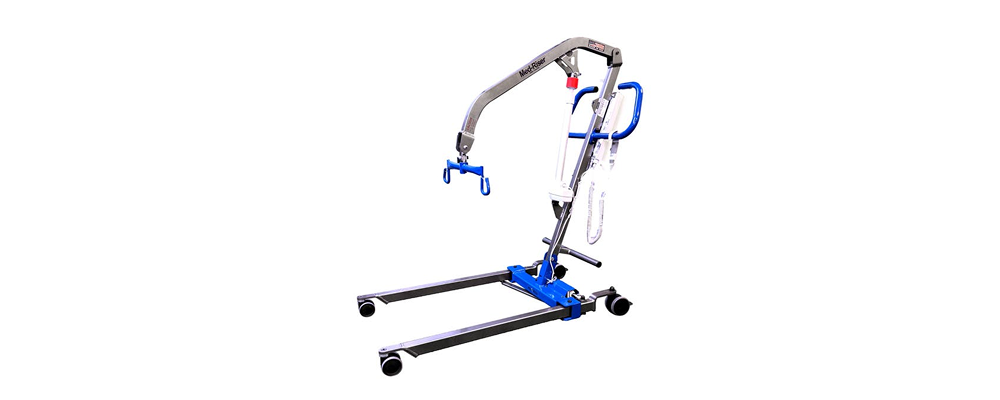
Med-Riser 450 Folding Patient Lift
Product Highlights
- Electric height and base adjustments
- 450-pound heavy-duty weight capacity
- Tool-free folding for easy storage
- Dual pendant and control-box operation
- Optional integrated scale included
- Ergonomic handles improve control
- Kick bar adds repositioning leverage
- Adaptable for home or facility use
Caregiver Benefit
Electric operation, dual controls, and a tool-free folding option make daily transfers simple for caregivers at home.
Molift® Partner 255 Vertical Patient Lift
The Molift Partner 255 Vertical Patient Lift is the safest and most comfortable vertical hoisting option for those who need higher mobility. The device features an eco-friendly battery and a spacious sling bar that supports daily reliability.

Molift® Partner 255 Vertical Patient Lift
Product Highlights
- Eco-friendly NiMH battery power
- 560-pound safe working load
- Vertical hoist maintains a consistent distance
- 4-point sling bar for added comfort
Caregiver Benefit
Spacious sling bar and vertical lifting provide well-supported transfers for patients who need greater mobility.
Make Every Transfer Safer, Starting Today
Caregiving is demanding work, and protecting the people who provide it deserves the same attention as protecting the people receiving care. As more families and care teams recognize the toll that manual transfers take on the body, demand for safer, more reliable lift equipment continues to grow. Choosing the right equipment today means fewer injuries, less pain, and a longer, healthier caregiving career tomorrow.
Med Mart helps families and care professionals throughout Cincinnati and Dayton find the right mobility equipment for their specific needs, from full-body lifts to sit-to-stand systems. Reach out to the Med Mart team to talk through which option fits your home and your caregiving routine.
Frequently Asked Questions
1. Do I need special training to use an electric patient lift safely?
Most lifts require only brief, hands-on training covering sling placement, weight limits, and basic controls before safe daily use.
2. Can a single electric patient lift meet multiple caregiving needs?
Many models support different sling types and resident sizes, making a single lift versatile enough for a variety of daily transfers.
3. Are electric patient lifts suitable for bariatric residents?
Several Med Mart lifts support weight capacities of up to 600 pounds, making them suitable for many bariatric care situations.
4. How often does an electric patient lift need maintenance?
Routine checks of batteries, slings, and moving parts every few months can help keep most electric lifts working safely for years.