


Before the First Sniffle: Your Fall Medicine Cabinet Checklist

You’ve found the hoodies, switched your coffee order, and probably watched someone argue about pumpkin spice.
But when was the last time you checked your thermometer—or the expiration date on that cold medicine?
Before the first “I think I’m coming down with something,” give your household health supplies a quick review. A little organization now can save you from searching through half-empty boxes when you’d rather be under a blanket.
Start with what you already have
Before adding anything to your shopping list, gather your household’s over-the-counter medicines and everyday health supplies.
Check each product’s name, expiration date, packaging, and remaining quantity. Keep medicines in their original labeled containers so directions and warnings stay with them.
Set expired medicines aside for safe disposal, out of children’s reach. The FDA advises against using expired medicines because they may no longer be safe or effective. FDA guidance on expired medicines
For products you no longer recognize or labels you cannot read, ask a pharmacist what to do. Mystery bottles do not deserve a permanent spot on the shelf.
Check first. Shop second. The most useful fall restock starts with knowing what you already have—and what actually needs replacing.
Make sure your thermometer is ready
The time to discover a dead thermometer battery is before someone needs a temperature check.
Find your thermometer, turn it on, and review the manufacturer’s instructions. Check that you have any required batteries or disposable covers, and follow the device’s cleaning directions.
If you need a replacement, compare:
-
The intended age range and measurement method.
-
How easy the display is to read.
-
Battery requirements.
-
Cleaning instructions.
-
Any accessories the device requires.
Keep the instructions with the thermometer. A familiar-looking device may work differently from the one you used before.
Read beyond the front of the cold medicine box
“Daytime,” “nighttime,” and “multi-symptom” are easy to spot. The active ingredients deserve just as much attention.
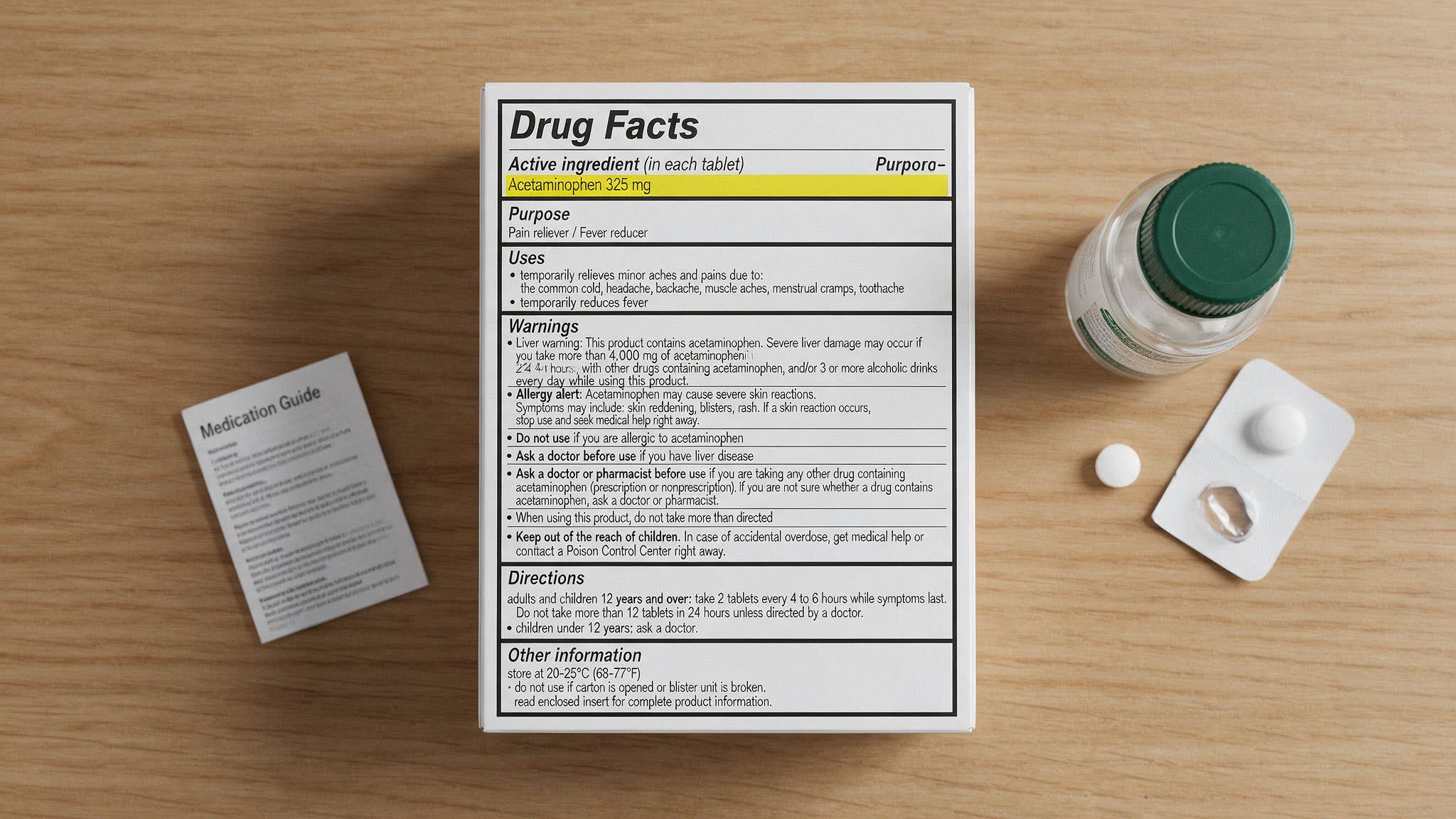
The Drug Facts label explains what a medicine contains, what it treats, who should avoid it, and how to use it. Choose products appropriate to the person and symptoms rather than automatically reaching for the box with the longest list of benefits. FDA guide to OTC medicines
Compare ingredients before combining medicines. For example, acetaminophen may appear in both a pain reliever and a multi-symptom cold product. Taking them together can mean taking too much of the same medicine. The FDA advises against using more than one acetaminophen-containing product at a time. FDA acetaminophen guidance
If you take prescription medicines, have a health condition, or are unsure which option fits your needs, ask a pharmacist before buying.
Different boxes can contain the same active ingredient. Check the Drug Facts labels before combining medicines.
Keep children’s needs separate
An adult medicine is not a children’s medicine with a smaller serving size.
Check age restrictions and dosing instructions for the exact product. Keep any supplied measuring device with it, and do not substitute a kitchen spoon.
The FDA does not recommend OTC cough and cold medicines for children younger than two. Manufacturers voluntarily label these products “Do not use in children under 4 years of age.” Ask your child’s healthcare professional when you are unsure what is appropriate. FDA guidance on children’s cough and cold medicines
Store adult and children’s products so they are easy for caregivers to distinguish, while keeping all medicines out of children’s reach and sight.
Restock the practical extras
Your fall supply check does not have to become a cart full of medicine.
Start with the items your household uses:
| Item | What to check |
|---|---|
| Thermometer | Working condition, instructions, batteries, and required accessories |
| Tissues | Enough for your household’s usual needs |
| OTC medicines, if appropriate | Active ingredients, warnings, age restrictions, and expiration dates |
| Liquid medicine measuring device | Correct device supplied or recommended for the product |
| Everyday first aid supplies | Missing items, damaged packaging, and dates where applicable |
| Household supply list | Exact product names and what actually needs replacing |
Choose quantities you can reasonably use. A large package is only helpful if it fits your household’s needs and storage space.
Give your storage spot a check, too
Despite the name, a bathroom medicine cabinet is not always the best place to keep medicine.
Heat and moisture can affect products. Follow each label’s storage directions; the FDA notes that a cool, dry location is better for most medicines than a damp bathroom cabinet. Products with special storage requirements need those conditions maintained. FDA medicine storage guidance
Keep medicines up, away, and out of sight of young children. Put them back after every use, including when someone is sick and you expect to need them again soon. CDC safe medicine storage guidance
Clear out expired medicines responsibly
Do not empty old medicines down the sink or toilet as a general cleanup method.
The FDA recommends a take-back option for most unused or expired medicines. Some pharmacies and authorized collection locations offer drop-off or mail-back services.
If take-back is unavailable, follow the medicine’s disposal instructions and the FDA’s guidance. Only certain medicines belong on the FDA flush list. FDA medicine disposal guidance
Your quick fall medicine cabinet checklist
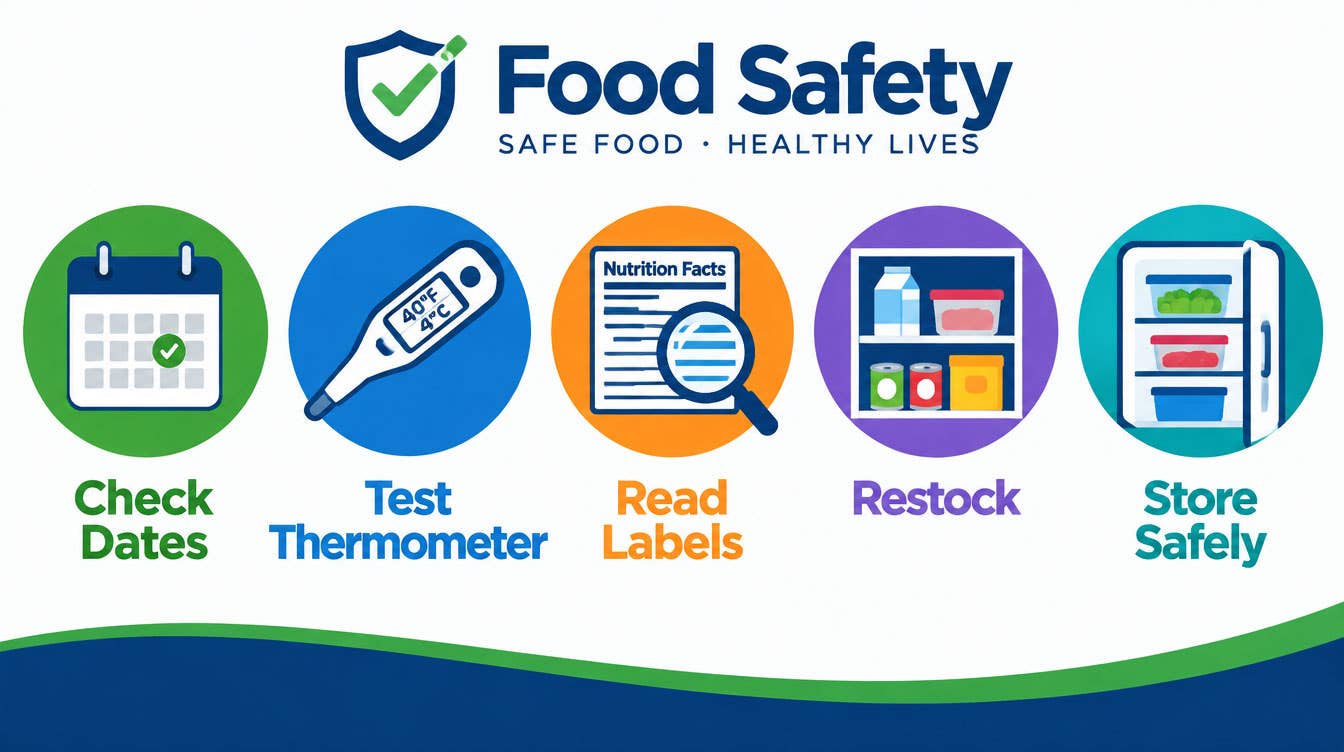
Before calling the job done:
-
Check medicine expiration dates.
-
Keep labels and directions with each product.
-
Test the thermometer and check its accessories.
-
Review active ingredients before buying duplicate products.
-
Confirm age restrictions for children’s medicines.
-
Restock the everyday supplies you actually use.
-
Check storage conditions and child safety.
-
Arrange safe disposal of expired or unwanted medicines.
Save your shopping list for the next check. When you find a product that suits your needs, record its full name and size so it is easier to identify again.
Common questions
Should I replace every medicine each fall?
No. Review what you have, follow expiration dates and storage instructions, and replace only what is needed. Ask a pharmacist about anything you are unsure of.
Should I buy a multi-symptom cold medicine just in case?
Choose medicines based on the person’s needs and the product’s labeling. A pharmacist can help you identify an appropriate option without unnecessarily duplicating ingredients.
Does a stocked medicine cabinet prevent illness?
No. This checklist helps you organize supplies and prepare for everyday needs. It does not prevent illness or replace medical care.
Get your fall essentials together with Med Mart Supply
A working thermometer, clearly labeled supplies, and a short restock list are a useful place to start.
Explore Med Mart Supply for home monitoring products and everyday health essentials. Check individual product details, directions, and availability before ordering.
Then get back to the important fall decisions—like whether it’s officially sweater weather.