

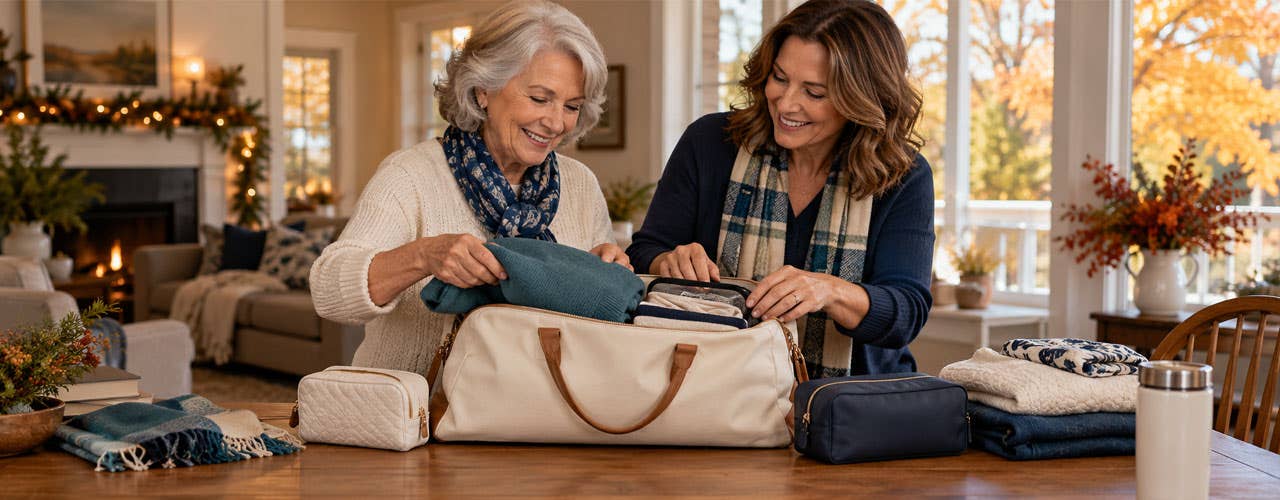
Heading Out for the Holidays? A Caregiver’s Packing Checklist

The overnight bag is open. The holiday plans are coming together. And somewhere between choosing an outfit and finding the phone charger, there’s another list to make: the everyday care supplies that need to come along.
Whether you’re helping a parent visit family or supporting someone on a weekend away, packing starts with understanding their usual routine.
You don’t need to bring the entire supply cabinet. Focus on what the person uses, what needs to stay within reach, and what would be difficult to replace once you arrive.
Start with the everyday routine
Walk through a typical day together, from getting dressed in the morning to settling in at night.
Which supplies are used regularly? Does the person prefer a particular product, size, or style? Are there items they want to pack themselves?
Write down the details that matter. “Protective underwear” is a starting point; the exact product, size, and absorbency level make a more useful packing note.
If you’re unsure what someone needs, ask before adding items to the bag. Their preferences should guide the plan.
Pack around the person’s familiar routine. The most useful checklist is the one that reflects what they actually use.
Pack a small bag for the journey
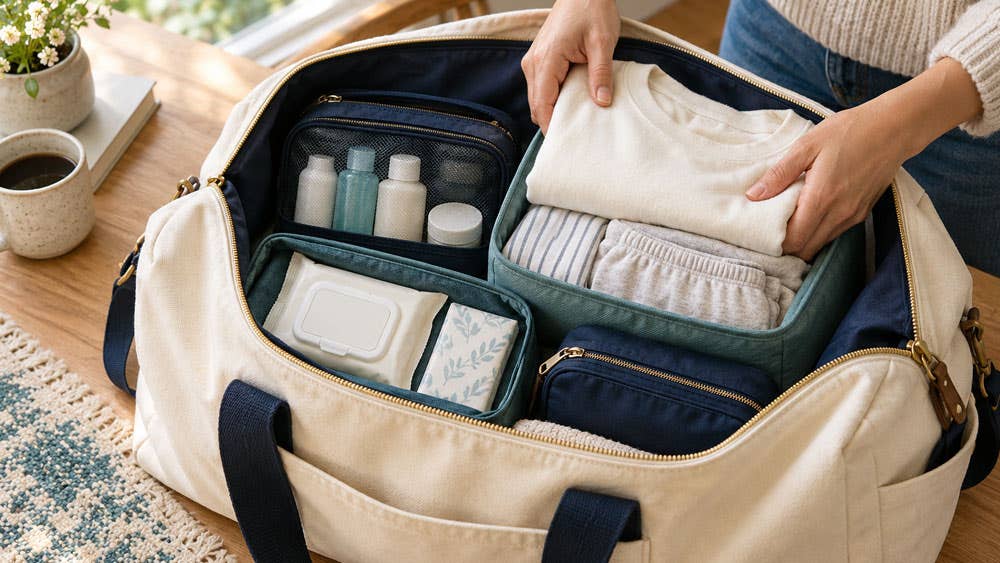
Keep the items you might need during the trip in a separate, easy-to-reach bag. That way, a change of clothes or personal care item doesn’t require unpacking the main suitcase.
Depending on the person’s routine, this bag might include:
-
Their usual incontinence products.
-
Personal cleansing wipes intended for use on skin.
-
Disposable gloves, if already part of their care routine.
-
A spare set of clothing and underwear.
-
Bags for used items or soiled clothing.
- Tissues and familiar personal care products.
Choose a bag with enough room to find things easily. A few labeled pouches can help separate clean clothing, personal care supplies, and items reserved for later.
Keep products in their original packaging when practical so directions and identifying information remain available.
Plan supplies for the whole visit
Start with how much the person normally uses each day, then multiply that by the number of days away. Add an extra amount based on their usual needs and the possibility of a delayed return.
For example, if someone typically uses four of a particular item each day, a three-day visit starts with a baseline of 12. Any extras would be added to that total. This is a packing calculation—not a recommendation for how often a product should be used or changed.
Check package quantities carefully when ordering. A pack and a case may contain very different amounts.
For a longer stay, ask whether there is space to keep supplies at the destination. If you plan to send an order ahead, confirm the delivery address, expected arrival, and who will receive it.
Start with one product that fits your needs. There’s no need to buy a different option for every room.
Check the setup before arriving
A short conversation with your host can answer questions that are hard to solve while standing beside a packed car.
Ask about:
-
Steps between the entrance and sleeping area.
-
The location of the bathroom.
-
Available space for any equipment the person normally uses.
-
A private place to change and keep supplies.
-
Laundry access.
-
Waste disposal.
-
Room to store the main supply bag.
Avoid assuming that an unfamiliar bathroom or borrowed piece of equipment will work for the person. Confirm the details in advance and follow the instructions for any equipment they use.
For hosts preparing their home, our “Hosting for the Holidays? A Bathroom Comfort Checklist for Overnight Guests” offers a companion planning guide.
Make room for comfort and privacy
Care supplies are only part of the packing list.
A familiar sweater, preferred toiletries, an extra outfit, or a favorite book may deserve space, too. Ask what would make the visit more comfortable.
Talk through how the person wants help offered during the trip. They may prefer to handle some tasks independently or have supplies kept somewhere discreet.
If more than one person is helping, agree on who is bringing the main supplies and who will keep the travel bag nearby.
Keep essentials easy to reach and personal care discreet. A little organization can make an unfamiliar place feel more manageable.
Your caregiver packing checklist
Use this as a starting point and leave out anything that doesn’t apply.
| Packing area | Items to consider |
|---|---|
| Everyday care | Familiar incontinence products, skin-cleansing wipes, and other usual supplies |
| Care routine | Disposable gloves and underpads, if normally used |
| Clothing | Spare underwear, comfortable outfits, and sleepwear |
| Personal care | Usual cleanser, moisturizer, toothbrush, and toiletries |
| Organization | Labeled pouches, bags for soiled clothing, and a separate travel bag |
| Equipment | Normally used aids, required accessories, and relevant instructions |
| Trip details | Host contact information, supply quantities, and a plan for replenishment |
| Personal comfort | Glasses, hearing-aid accessories if used, chargers, and familiar comfort items |
Handle medications and any specialized medical supplies as a separate part of the person’s established care plan. Confirm travel-specific questions with their pharmacist or care team.
Do one final check together
Before closing the bag, check three things:
The right products: Confirm the exact size, style, and package quantity.
The right location: Put supplies needed during the journey somewhere accessible.
The person’s preferences: Ask whether anything important is missing.
Then keep the list. After the visit, note what you used, what stayed packed, and what you wish you had brought. The next trip will have a better starting point.
Get everyday essentials ready for the trip
Planning a holiday visit? Review your supply list early and compare the products you need with what you already have at home.
Explore Med Mart Supply’s incontinence and personal care selections to prepare for time away.