


Your Everyday Diabetes Supply Checklist: Organize, Check, and Restock

A nearly empty box of test strips. A supply drawer with three similar-looking packages. A reorder that arrives—and turns out to be the wrong product.
Managing supplies is its own part of everyday diabetes care. Keeping a clear list can make it easier to see what you have, what you need, and which details to check before ordering.
Whether you’re organizing your own supplies or helping someone else, start with the products used in the person’s established care routine.
Start with your own care routine
There isn’t one shopping list that fits everyone living with diabetes. Your list should reflect the monitoring devices, medications, and instructions in your care plan.
Write down the exact names of the products you currently use. Depending on your routine, that might include monitoring supplies, injection supplies, and a sharps disposal container.
If you use a continuous glucose monitor or an insulin pump, include the supplies specified for that system. Ask your care team what backup supplies you should keep.
This checklist is for organizing supplies; your care team determines your testing schedule and treatment.
Match supplies to your devices
For a blood glucose meter, check the exact model name against the test strip packaging and instructions. The FDA advises using only the test strips specified for your meter. See the FDA’s compatibility guidance.
For other supplies, use the same careful approach: compare the device instructions, product description, and your care team’s recommendations before ordering.
| Supply | Details to confirm |
|---|---|
| Test strips | Exact compatible meter model and package quantity |
| Lancets | Compatibility with your lancing device |
| Pen needles, if used | Compatibility with your pen and the needle specifications recommended for you |
| Insulin syringes, if used | The syringe specified for your insulin and prescribed dose; confirm with your pharmacist |
| CGM or pump supplies, if used | Exact system and component version |
| Sharps container | Intended use, opening, closure, and available capacity |
Start with one product that fits your needs. There’s no need to buy a different option for every room.
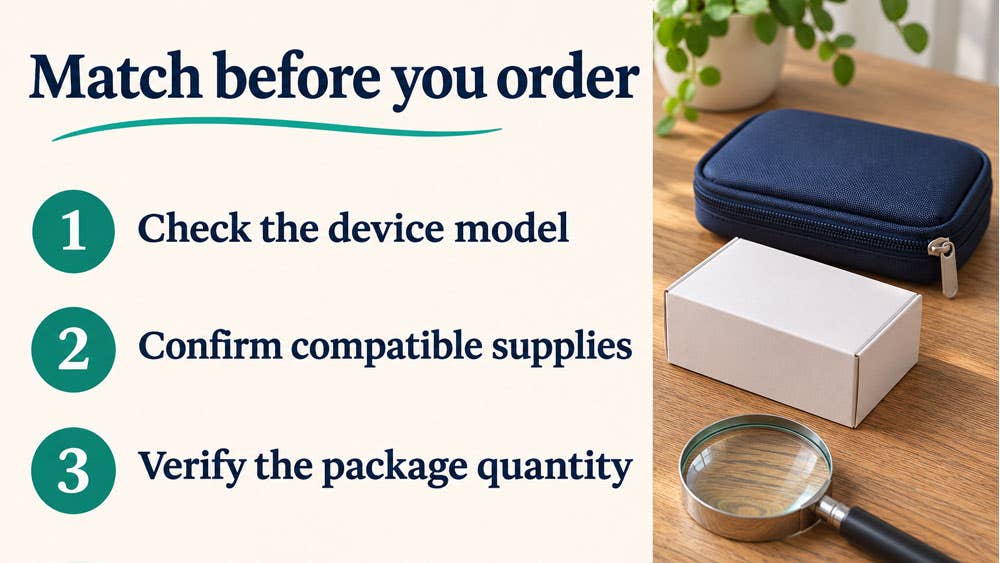
Check the model, not just the brand. Save the exact product name and item number so your next reorder starts with the right details.
Check dates and storage instructions
Review expiration dates when supplies arrive and during your regular inventory check. Place products with earlier expiration dates where you can find them first, while keeping their identifying information and instructions available.
For test strips, follow the manufacturer’s storage directions and don’t use expired strips. The FDA warns that improper storage and expired strips can lead to incorrect readings. It also recommends buying new, unopened test strips rather than pre-owned supplies. Read the FDA’s meter and test strip advice.
Check whether your products have additional instructions about how long they can be used after opening. Note the opening date when the instructions call for it.
Choose your storage location around the product’s requirements—not simply whichever drawer has room. Keep medication storage instructions separate and follow the directions for each medication.
Include sharps disposal in your setup
A supply checklist should account for used items as well as new ones.
Place used needles and lancets in an appropriate sharps disposal container immediately after use. Never put loose sharps in household trash or recycling, and never flush them. Keep the container out of reach of children and pets. See the FDA’s home sharps guidance.
Check the container’s fill line before it becomes full. Follow its closure instructions and your community’s disposal requirements. FDA-cleared containers have a marked fill line indicating when they should be considered full. Learn about sharps containers.
Add a replacement container to your reorder list early enough to have it available when needed.
Make reordering easier
Keep a short inventory on paper or in your phone. Include:
-
Exact product name and item number.
-
Compatible device model.
-
Package quantity.
-
Number of unopened packages remaining.
-
Expiration dates.
-
Where you usually order.
-
Your planned reorder point.
Base quantities on your established routine. Allow time for processing and delivery, and account for upcoming travel or holiday closures.
A photo of the correct box can be a useful reference, but check the current listing each time. Packaging, quantities, and product versions may differ.
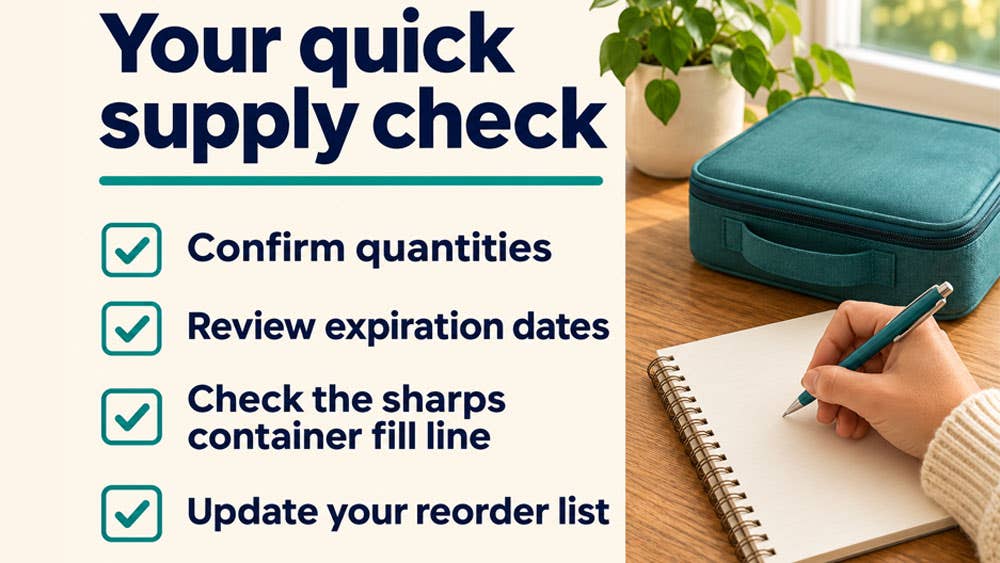
Choose a regular supply-check day. A quick look at quantities, dates, and your sharps container can make the next order easier to plan.
Your everyday supply checklist
Use only the items that apply to your care plan.
- Monitoring device and required accessories.
- Compatible, unexpired test strips, if used.
- Compatible lancets and lancing device, if used.
- Control solution, if specified by your meter instructions.
- Correct injection supplies, if used.
- CGM or pump supplies, if used.
- Sharps disposal container with available capacity.
- Batteries, charging supplies, or other required accessories.
- Product instructions and a saved reorder list.
- Medication supply reviewed separately according to your care plan.
A little organization for the next order
Before checking out, compare your cart with your saved product details. Confirm compatibility, size or specifications, and how many individual supplies each package contains.
If you help someone else, review the list together. Their usual products and preferences are the best starting point.
Explore Med Mart Supply’s diabetes care selection and compare the product details with your established routine.