

Home Care Supplies Checklist: What to Keep on Hand

A fresh package of wipes, the right size gloves, an extra set of linens—small supplies can make a big difference in how smoothly a care routine runs.
Whether you are helping a family member for the first time or reviewing an established routine, a home care supplies checklist gives you a place to start. Build your list around the person’s actual needs, then add the product details and quantities that make reordering easier.
Start with the care routine
Before filling a cart, write down the tasks that happen throughout a typical day. These might include bathing, dressing, toileting, meals, or using a home monitoring device.
For each task, note which supplies are already being used and which items the care team has recommended. Include the person receiving care in decisions about comfort and preferences whenever possible.
If care involves medical equipment, make sure everyone helping knows how to use it. The FDA recommends keeping device instructions close by and having caregivers demonstrate that they understand how the equipment works. FDA home healthcare checklist
A useful checklist reflects the person’s routine. Start with what they use, confirm what they need, and leave room to adjust as care changes.
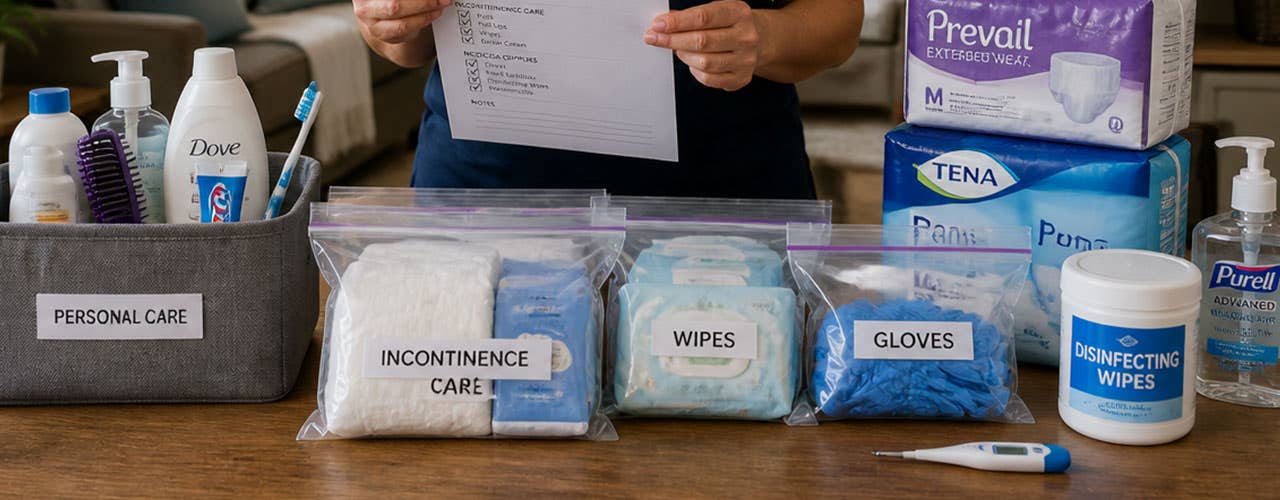
Personal care and hygiene supplies
Start with the everyday products that support bathing, cleansing, and getting dressed.
Depending on the routine, your list may include:
-
Personal cleansing wipes.
-
Skin cleansers and moisturizers.
-
Bathing products, washcloths, and towels.
-
Oral care products.
-
Disposable gloves appropriate to the care task.
Record preferences such as fragrance, package style, or the size of a wipe. These details help another caregiver reorder the familiar product.
Keep personal cleansing products clearly separate from household surface cleaners. Personal wipes also do not replace handwashing: the CDC notes that baby wipes are not designed to remove germs from hands. CDC hand hygiene questions
If a care task requires gloves, remember that gloves do not replace hand hygiene. Clean hands before putting them on and after removing them. CDC hand hygiene guidance
Incontinence and bedding supplies
If incontinence products are part of the routine, save more than the brand name. Record the exact style, size, absorbency description, and item number.
Your checklist might include:
-
Adult briefs or protective underwear.
-
Pads, liners, or guards, if used.
-
Underpads.
-
Personal cleansing products.
-
Spare bedding and washable linens.
Keep the wearer’s usual product information in one shared place. A note that says “large protective underwear, item number ___” is more useful than “buy more supplies.”
Before ordering a case of an unfamiliar product, check the fit information and package quantity. For help understanding the two main wearable styles, read our guide to Adult Briefs vs. Protective Underwear: Understanding Your Options.
Monitoring and care-specific supplies
Some households need only a few everyday essentials. Others also use monitoring devices or supplies for a specific care plan.
Include these items when they are part of the person’s established care:
| Care routine | Details to record |
|---|---|
| Home monitoring | Device model, compatible accessories, and required batteries |
| Diabetes care | Exact monitoring and injection supplies specified by the care team |
| Wound care | Dressing names, sizes, and other supplies listed in the care instructions |
| Respiratory care | Device model and manufacturer-specified replacement supplies |
| Nutrition and feeding | Exact products and accessories used in the feeding plan |
Keep instructions and supplier contact information accessible. The FDA also recommends a backup plan for medical devices, including appropriate spare supplies and knowing whom to contact if equipment fails. FDA home healthcare checklist
If you cannot identify the correct replacement, ask the care team or supplier before substituting a similar-looking item.
Check reusable equipment separately
Not everything on a home care checklist needs to be reordered regularly.
Shower chairs, walking aids, dressing aids, and other reusable products belong on a separate equipment list. Note the model, instructions, and any accessories that go with them.
This keeps routine replenishment purchases separate from equipment decisions that may require measurements, compatibility checks, or professional guidance.
Decide when to reorder
Once you know what belongs on the list, track how quickly the household uses it.
For everyday consumables, record:
-
The quantity currently on hand.
-
Typical daily or weekly use.
-
Expected delivery time.
-
A reserve that accounts for possible delays.
-
Whether someone has already placed an order.
For example, a household using one package of wipes each week might choose to reorder when two unopened packages remain. That is an inventory example; the right reserve depends on actual use and delivery timing.
Save the product name, size, item number, and package count together. Those four details make it easier to repeat the right order.
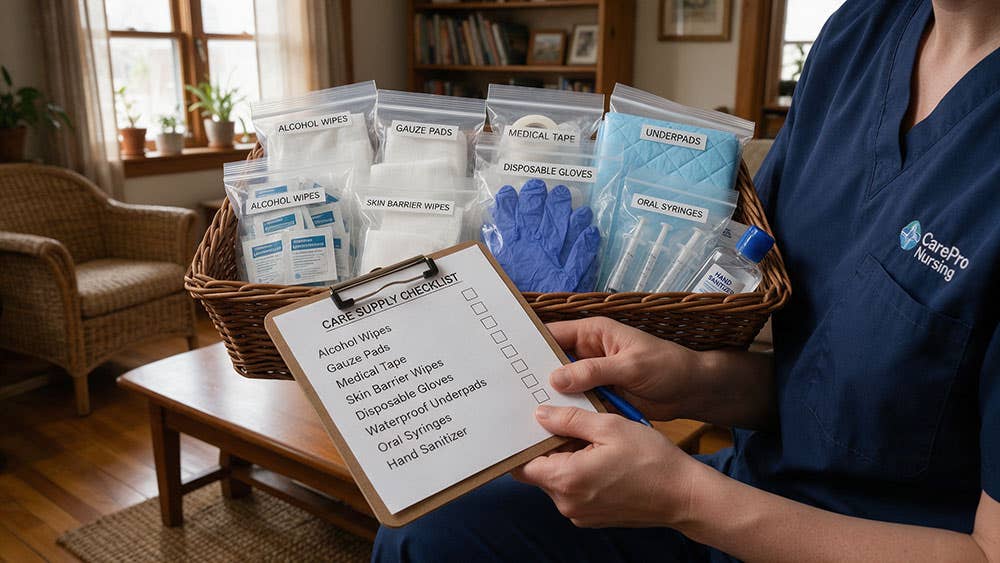
Your quick home care supply check
Use this short review before placing the next order:
-
Have we checked supplies in every storage area?
-
Are the listed products still part of the current routine?
-
Are sizes, models, and item numbers recorded?
-
Does the price cover one pack or a full case?
-
Have we checked expiration dates where applicable?
-
Is there an order already on the way?
-
Does everyone helping know where supplies and instructions are kept?
Keep the list somewhere easy to update. A shared note or a printed sheet inside the supply cabinet can work well.
Common questions
Does every household need all these supplies?
No. Use the categories as prompts, then keep only the items that match the person’s routine and care instructions.
Should I buy everything in bulk?
Consider bulk quantities after confirming that a product works for your household. Compare storage space, package quantities, expiration dates, and how quickly the supplies are used.
How often should I review the list?
Choose a regular check that fits your routine, such as before your weekly shopping. Review it again when products, equipment, or care needs change.
Build your list with Med Mart Supply
Med Mart Supply brings together personal care, incontinence, home monitoring, and other home care categories. Start with the supplies your household already uses, then compare product details and package quantities before ordering.
Explore Med Mart Supply to build your next supply list around your everyday care routine.