

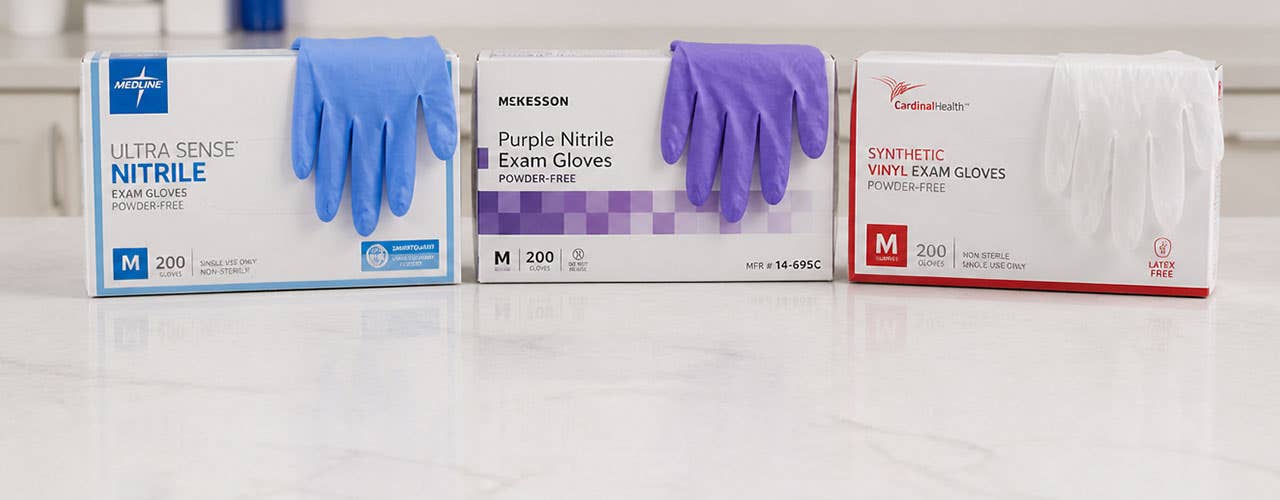
Nitrile vs. Vinyl vs. Latex Gloves: What to Check Before You Buy

When you shop for disposable gloves, the boxes can look similar. But the material, intended use, and fit can make a difference in which product belongs in your supply cabinet.
Nitrile, vinyl, and latex are three common glove materials. Start with the task you need gloves for, then compare the product’s labeling, size, and package details.
What is the difference?
Nitrile and vinyl are synthetic materials. Latex gloves contain natural rubber latex, which can cause allergic reactions. The FDA advises choosing a synthetic alternative when the wearer or patient has a natural rubber latex allergy. FDA medical glove guidance
| Material | What it is | Main consideration |
|---|---|---|
| Nitrile | A synthetic rubber material | Check the individual product’s intended use, fit, and performance information |
| Vinyl | A synthetic material, typically PVC | Consider the task’s demands and the product’s durability |
| Latex | Natural rubber latex | Consider latex allergies affecting both the wearer and the person receiving care |
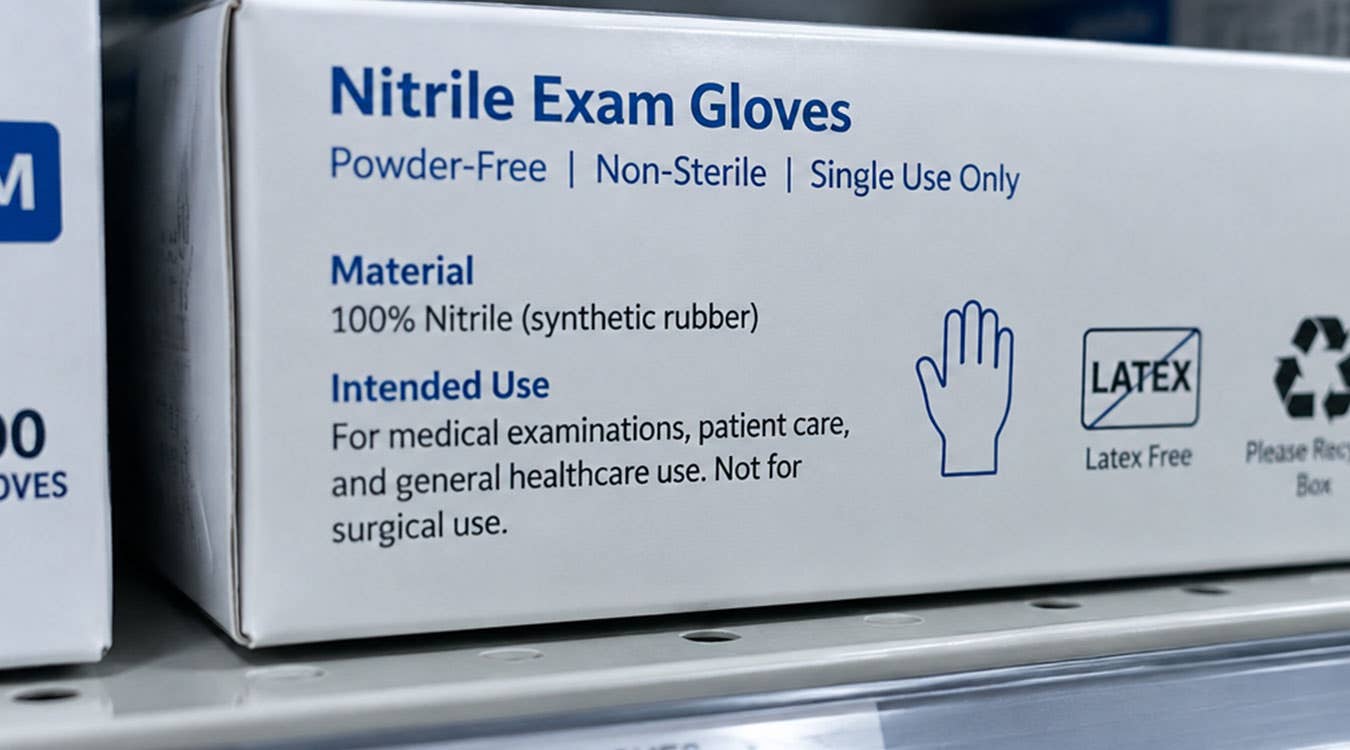
Material is one part of the decision. Two gloves made from nitrile, for example, may have different intended uses and specifications.
Choose gloves for the task first. Material, fit, and product labeling should all support the work you need to do.
Start with the intended use
Look for a clear description of what the gloves are designed for.
For patient care, check that the product is labeled for medical examination use. Do not assume a general-purpose or food-handling glove is suitable simply because it looks like an examination glove. The FDA regulates medical gloves as medical devices. FDA medical glove guidance
Task demands also matter. The CDC notes that vinyl gloves have shown higher failure rates than latex or nitrile under clinical conditions. It identifies latex or nitrile as preferable for clinical procedures requiring manual dexterity or more than brief patient contact. Latex allergy considerations still apply. CDC guidance on glove selection
For workplace purchasing, follow your organization’s requirements. If you are helping someone at home, ask their care team which gloves are appropriate for the tasks you perform.
Check allergy information
Before choosing latex gloves, consider everyone who may come into contact with them.
If the wearer or person receiving care has a known natural rubber latex allergy, select an appropriate synthetic alternative. Read the actual package rather than relying on the product photograph or glove color. FDA medical glove guidance
Keep the confirmed material and product name in your reorder notes so another buyer does not accidentally substitute a different option.
Find a size that works for the wearer
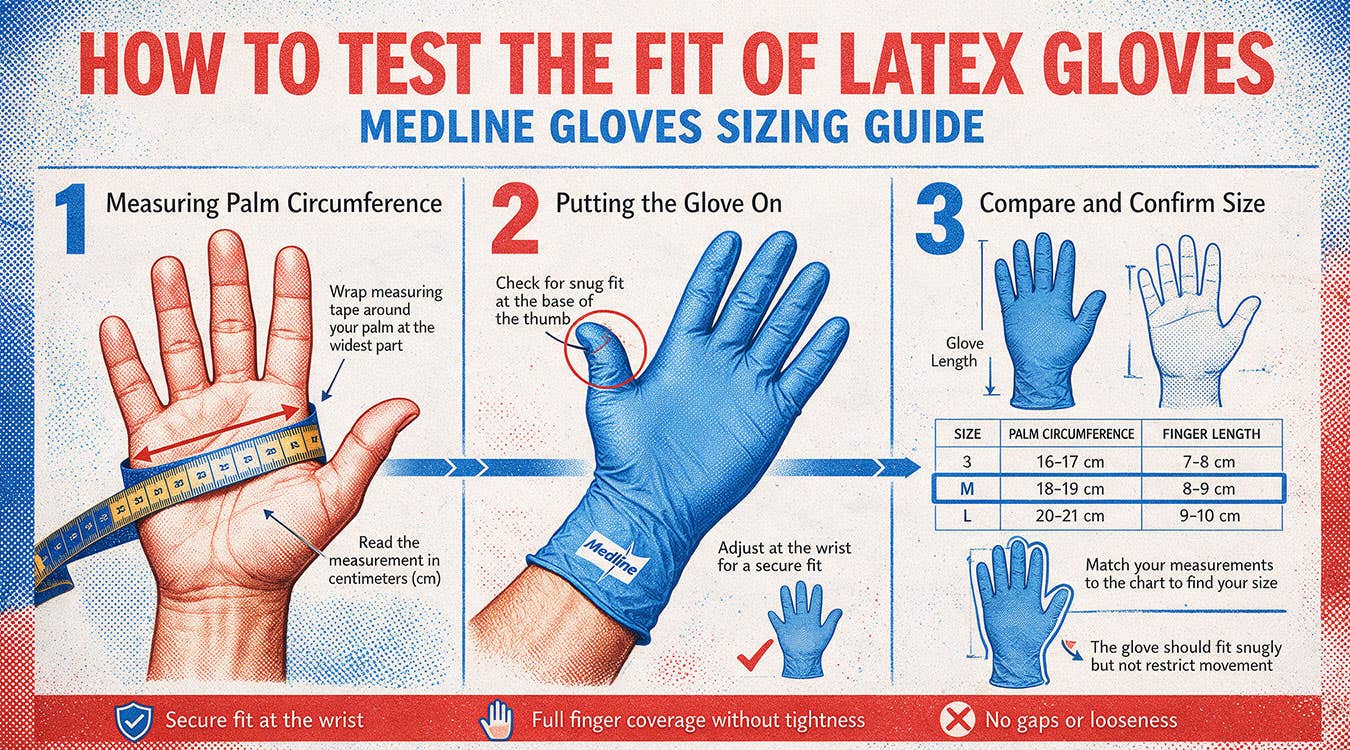
Gloves should allow you to perform the task without excessive loose material getting in the way or tightness restricting movement.
Review the manufacturer’s sizing information. If several people use the supplies, you may need more than one size. The CDC recommends gloves with fit and durability appropriate to the task. CDC infection-control recommendations
Before buying a large quantity of an unfamiliar product, consider a smaller available package. Check fit and usability before making it your standard reorder.
Read the product details
Once you have narrowed the material and size, compare the rest of the listing:
-
Intended use: Does the description match your care or workplace task?
-
Sterility: Is the product sterile or nonsterile, as required?
-
Texture: Does the listing describe textured fingertips or another grip feature?
-
Cuff length: Does the product provide the coverage your task requires?
-
Specialized claims: Does the manufacturer specifically support any additional protection you need?
For chemical handling or specialized clinical work, follow the applicable product instructions and workplace requirements. A material name alone does not establish protection against every substance.
A familiar color or material does not confirm a glove’s intended use. Check the exact product description before substituting a different box.
Compare box and case quantities
A lower package price does not always mean a lower cost per glove.
Check the number of individual gloves in each box and the number of boxes in a case. Confirm whether the listing counts individual gloves or pairs.
For a simple comparison, divide the price by the total number of gloves. A hypothetical $12 box containing 100 gloves costs $0.12 per glove.
Compare products that meet the same requirements. Fit and suitability should be settled before you use price to choose between options.
Keep hand hygiene in the routine
Gloves do not replace cleaning your hands. When a care task requires gloves, clean your hands before putting them on and after taking them off.
Change gloves when they become damaged or soiled, and when moving from a contaminated task to a clean task. Follow the care setting’s instructions for glove changes. CDC hand hygiene guidance
Disposable gloves should not be washed for reuse. CDC core infection-prevention practices
Common questions
Are nitrile gloves always the right choice?
There is no single choice for every task. Confirm the exact product’s intended use, size, and specifications rather than choosing by material alone.
Can several caregivers use the same glove size?
Only if that size fits each person appropriately. Keeping multiple sizes available may be more practical.
What should I save for reordering?
Record the brand, product name, material, size, item number, and package quantity. These details make it easier to repeat the correct purchase.
Compare disposable gloves at Med Mart Supply
Browse gloves at Med Mart Supply and compare the material, sizing, intended use, and package details.
Keep your confirmed specifications handy so your next order matches the needs of the people using them.